
HOME - Bilingual Anchor for Corporate Events: Hindi-English Guide
 Bilingual Anchor for Corporate Events: Hindi-English Guide
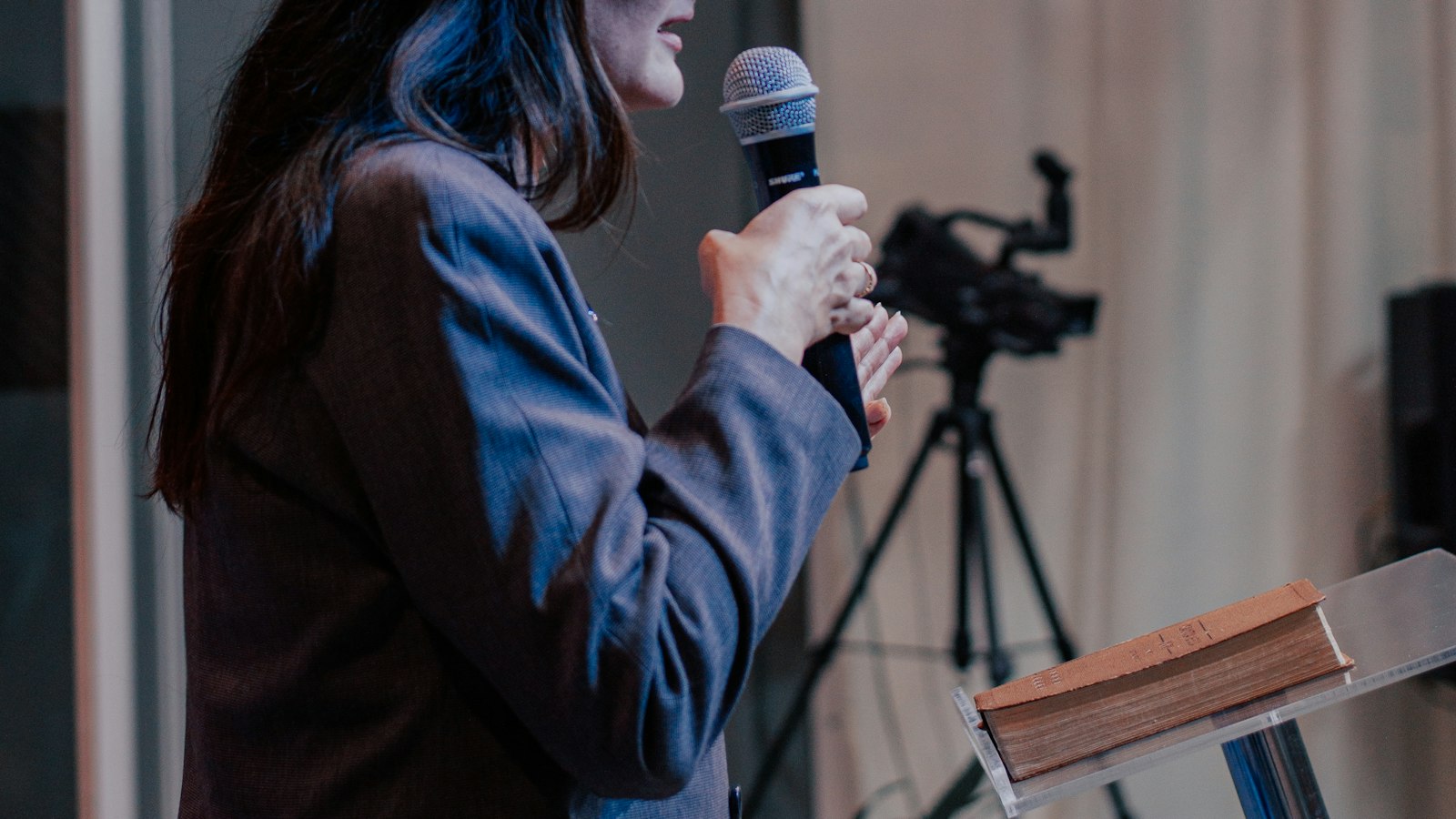
Quick answer: A bilingual anchor hosts your corporate event in both Hindi and English, switching language by segment and audience. In Delhi NCR this usually works best: leadership content stays in polished English, while awards, games and dealer or staff moments land in Hindi or Hinglish, so every person in the room feels addressed, not just the front rows.
Key takeaways
- Mixed Hindi–English rooms are the norm in North India: about 26% of Indians were bilingual in the 2011 Census, and far more understand Hindi than English.
- Decide the language mix per segment, not for the whole event: formal parts in English, energy parts in Hindi.
- A good bilingual anchor switches smoothly and never translates every line twice.
- Tell your anchor the audience profile, the CEO’s preferred language and any regional guests at least a week ahead.
- Test a candidate by asking for a short sample in both languages before you book.
By Anchor Aiman, corporate emcee and event anchor, Delhi NCR · Last updated: 19 November 2026
What is a bilingual anchor?
A bilingual anchor is an emcee who can run an entire event in two languages, most commonly Hindi and English in North India. She chooses which language to use for each moment based on who is speaking, who is listening and what the segment needs.
This is different from a translator. A translator repeats the same content in a second language. A bilingual anchor writes the event in two languages: she might welcome the CEO in crisp English, then call the sales team on stage with a Hindi line that gets a cheer. The audience hears one confident host, not a lecture repeated twice.
Why do corporate events in India need a bilingual anchor?
Corporate events in India need a bilingual anchor because most audiences are mixed. Senior management, international guests and clients often prefer English, while many employees, dealers and their families connect more strongly in Hindi.
The numbers explain why. In the 2011 Census, about 43.6% of Indians reported Hindi as their first language and roughly 57% spoke it as a first, second or third language, while about 10.6% spoke English; around 26% of the population was bilingual (Multilingualism in India, Census 2011 data). In a typical Delhi NCR annual day or dealer meet, that means a large share of the room thinks in Hindi even when the slides are in English.
Mixing languages is also simply how India communicates today. A study of Indian media by Barnali Chetia found that code-mixing between Hindi and English in ads, jingles and songs has become “a norm rather than a deviation” (Code-Switching and Mixing in Communication, 2017). Your event audience hears Hinglish on TV, in ads and on Instagram every day; a host who speaks the same way feels natural.
Hindi, English or both: which language should your event use?
Choose the language by audience and segment. Use this quick guide from events I have hosted across Delhi NCR.
| Event type | Typical audience | Best language mix |
|---|---|---|
| Leadership conference, investor or client summit | Senior managers, clients, some foreign guests | Mostly English (80–90%), a Hindi line for warmth |
| Annual day, R&R or award night | All employees, sometimes families | Balanced Hinglish (about 50/50) |
| Dealer or distributor meet | Dealers from Tier 2–3 towns, sales team | Mostly Hindi (60–70%), English for leadership and product specs |
| Diwali, year-end or New Year party | Employees in celebration mode | Hindi-led Hinglish, games in Hindi |
| Product launch with media | Press, influencers, partners | English core, Hindi for the reveal moment and audience interaction |
| Factory or plant event | Workforce, supervisors, management | Mostly Hindi, short English for visiting leadership |
If you are unsure, ask HR one question: “In which language do people joke at lunch?” That is usually the language of your audience’s heart, and it should lead the fun segments.
How does a bilingual anchor switch between Hindi and English?
A skilled bilingual anchor switches language at natural breaks in the show, not in the middle of every sentence. The switch follows the purpose of each segment: information in the language of the speaker, emotion in the language of the audience.
- Formal segments (welcome, CEO address, vision talk, safety briefing): English, with a one-line Hindi bridge before and after so nobody feels lost.
- Recognition segments (awards, long-service honours): name and citation in English, the celebration line in Hindi (“Zor daar taaliyan ho jaayein!”).
- Interactive segments (games, quizzes, team cheers): Hindi or Hinglish, because laughter comes faster in the first language.
- Closing (vote of thanks, dinner announcement): back to a short, warm Hinglish mix.
What a good anchor avoids: saying everything twice. Full translation doubles the run time and bores both groups. Instead, she gives the key point in one language and a short summary or punchline in the other.
What should you look for when hiring a bilingual anchor?
Look for natural fluency in both languages, a clear accent in English, correct Hindi pronunciation and the ability to read the room and switch on the spot. Ask for video of a real event, not only a studio showreel.
- Ask for a 60-second sample in both languages. A quick voice note introducing your CEO in English and calling award winners in Hindi tells you more than a profile.
- Check name pronunciation. Mixed teams have names from many states; a professional anchor asks for phonetic spellings before the event.
- Check script writing. Can she write her own Hindi and English links, or does she depend on you for every line?
- Check formality range. The same person must sound right at a boardroom-style session and at a Bollywood-themed party.
- Check regional sensitivity. If you have South Indian or international colleagues, the anchor should keep them included, for example with English summaries during Hindi games.
For a fuller list, read my questions to ask before hiring an anchor, and if you are comparing quotes, see anchor charges in Delhi NCR.
How do you brief a bilingual anchor before the event?
Brief your anchor 7–10 days before the event with the run of show, speaker list, audience profile and your preferred language mix. A two-line note on each segment (“CEO speech: English; team games: Hindi”) saves a lot of last-minute guesswork.
- Audience size, departments and approximate share of senior staff, field staff and guests.
- The CEO’s or chief guest’s preferred language and whether they like light humour.
- Any guests who do not understand Hindi, so the anchor can add short English recaps.
- Words to avoid (internal sensitivities, competitor names) and brand terms to say exactly.
- Award names, winners and phonetic spellings of every name.
My corporate event planning checklist for HR teams includes the full anchor brief template along with venue and AV timelines.
Common mistakes with bilingual event hosting
The most common mistake is treating language as an afterthought. These four problems show up again and again:
- Translating everything. It makes a 3-hour show feel like 5 hours.
- English-only awards for a Hindi-speaking audience. The winners’ teams cheer less because the moment does not feel like theirs.
- Forced shuddh Hindi. Very formal Hindi can sound distant at a party; everyday Hinglish is warmer.
- Ignoring non-Hindi speakers. One English line during each Hindi game keeps colleagues from other states included.
Frequently asked questions
Is it better to host a corporate event in Hindi or English?
For most Delhi NCR corporate events, a mix works best. Keep leadership and business content in English and use Hindi or Hinglish for awards, games and audience interaction.
Does a bilingual anchor charge more?
Usually not. In Delhi NCR, professional corporate anchors are expected to work in both Hindi and English, so the fee depends more on experience, event length and travel than on language.
Can a bilingual anchor include colleagues who don’t speak Hindi?
Yes. A good anchor adds quick English summaries during Hindi segments and explains game rules in both languages, so international or South Indian colleagues can join in.
How much Hindi should be used at a dealer meet?
At most North Indian dealer meets, 60–70% Hindi works well, with English for leadership speeches and product details. See my dealer meet ideas and agenda for a full run of show.
Is Hinglish professional enough for a corporate event?
Yes, when it is used with intent. Natural Hinglish in fun and recognition segments makes people feel at ease, while formal segments stay in clear English.
Looking for a bilingual corporate anchor in Delhi NCR?
I am Anchor Aiman, a corporate and wedding emcee based in Delhi NCR, and I host annual days, award nights, dealer meets and product launches in Hindi, English and easy Hinglish across India. See my corporate event hosting page or send an enquiry with your date to check availability.
0 Comment